• Banner Image 4

India in Transition

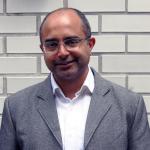
  • C. Raja Mohan
    05/20/2013
    C. Raja Mohan.jpg

    If the historic trend line in Sino-Indian relations holds, the recent India-China military stand-off in the Ladakh region of Jammu and Kashmir will soon be followed by predictable hype in Delhi about the impending transformation of bilateral relations and how it might change the world. The three week intrusion by the Chinese security forces into territory claimed by India came to an end in early May after India persuaded Beijing that a failure to restore the status quo ante could severely set back the bilateral relationship.

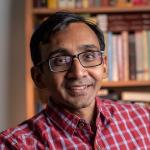
  • Ritu Kamal
    05/06/2013
    Ritu Kamal.jpg

    Medical devices form a $200 billion global industry, which develops and manufactures essential healthcare equipment ranging in complexity from simple devices like thermometers and stethoscopes to complex devices like pacemakers, ultrasound machines and surgical robots. India’s medical devices market was worth $3 billion in 2011 and grew at roughly 15 percent annually in that year. It is expected to grow at a 16 percent compounded annual clip during the 2010-2015 period, far better than the 2-3 percent growth expected in this sector in the U.S. and Europe.

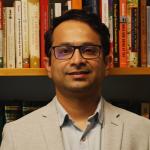
  • Shruti Rajagopalan
    04/22/2013
    Shruti Rajagopalan.jpg

    In India today, matters of public interest seem to get their due only when the Supreme Court has added its two cents. Interest groups, representing both general and special interests, petition the judiciary actively. Debate on any topic often leads to the importance and activism of the Indian Judiciary. In an era where virtually all institutions in India have been vulnerable to political capture, the judiciary seems like the last hope for citizens to receive a fair hearing.

  • Avijit Ghosh
    04/08/2013
    Avijit Ghosh 2.jpg

    Last month when the song, “Bolo Na” from the 2012 film, Chittagong, got the national award for best lyrics, many music lovers not having heard it before immediately logged onto the Internet to hear the number. Written by Prasoon Joshi, the song talks about hesitant love; it has the flavor of early spring, of flowers yet to bloom. The words go: Bolo naa, bolo naa // Rituon ko ghar sey nikalne toh do // Boye the mausam khilne toh do // Hothon ki munder pe ruki // Motiyon si baat bol do // Pheeki pheeki si hai zindagi // Cheeni cheeni khwab ghol do (Say something // let the seasons step out of home // let the season we had sowed blossom // the words at the edge of your lips // let those pearls emerge // our life is drab // sugar them with your dreams).

  • Victoria Tuke
    03/25/2013
    Victoria Tuke.jpg

    Despite favorable geopolitical conditions such as concern over the nature of China’s rise, the relationship between India and Japan remains one of unfulfilled potential. The persistence of a “perception gap” between the two is preventing deeper engagement. At first glance, India and Japan appear natural partners. Located on the periphery of Asia, both are examples of economic growth developing in line with democratic values. Furthermore, India and Japan share no territorial disputes or historical animosity. Since a nadir following India’s nuclear tests in 1998, relations have evolved apace yet certain sticking points are holding back its promise.

  • Neel Maitra
    03/11/2013

    In 1993, shortly after the discovery of the largest scam in the history of the Indian capital markets, the Securities Exchange Board of India (SEBI) banned the use of badla. The badla mechanism, which allowed trades to be carried forward without settlement, based on borrowed shares or cash, had already attracted criticism from such disparate sources as the International Finance Commission and the then-esteemed firm of Arthur Andersen. An article which appeared in Economic and Political Weekly a few years after the ban, noted that SEBI’s antipathy to badla extended to a reluctance to even use the term, preferring instead the euphemism “carry forward.”

  • Andrew B. Kennedy
    02/25/2013
    Andy Kennedy.jpg

    If globalization is a game, India would seem to be one of its winners. The past decade has seen India record impressive economic growth and move into fast-moving high tech sectors. Nowhere is this transition more apparent than in information and communication technology (ICT). While China has made a name for itself making ICT hardware, India is known for its prowess in software. Multinational corporations from Microsoft to Adobe have set up R&D centers in India, while home-grown firms like Infosys and Wipro have taken advantage of the outsourcing boom to become global players.